How to Visualize When You Can't See Mental Images - The Complete Guide for Non-Visual Thinkers
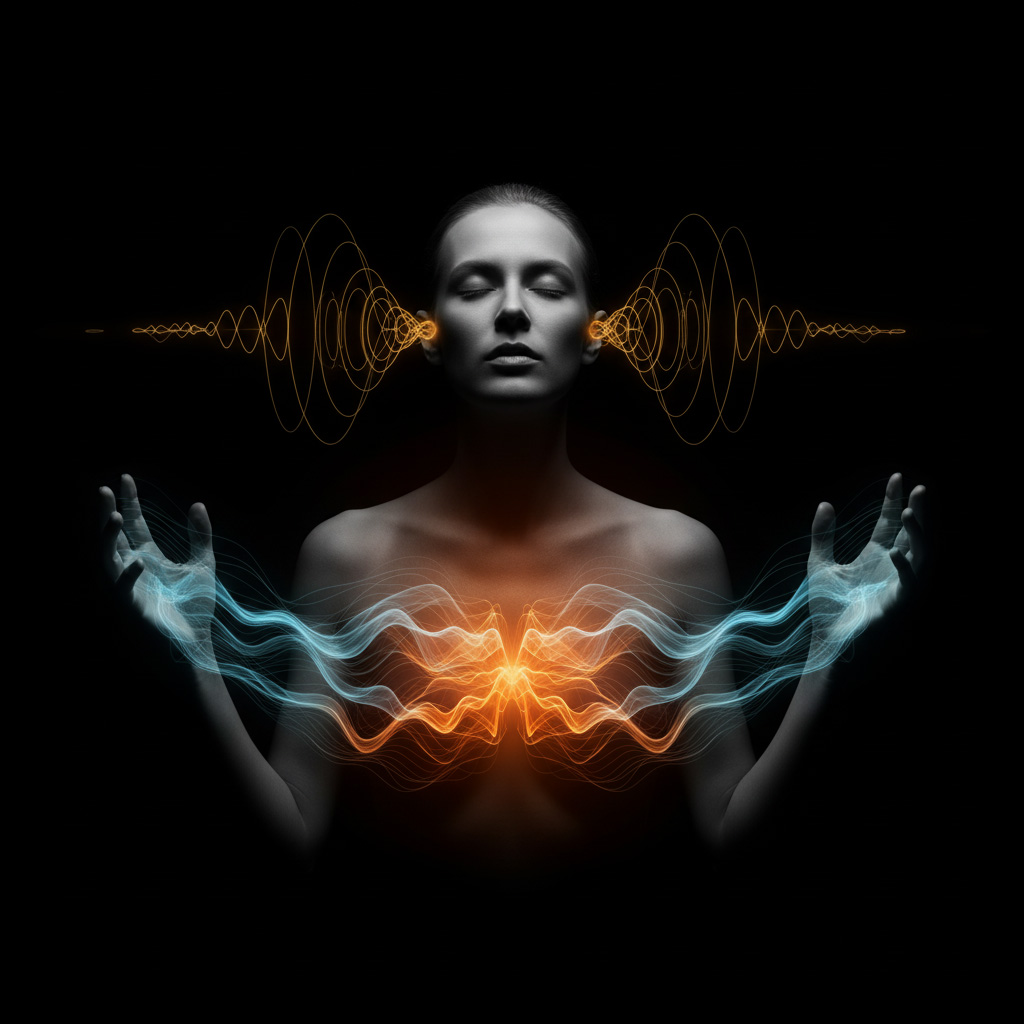
If you've ever felt frustrated when someone tells you to "just visualize" your goals - because you literally cannot see clear mental pictures - you're not alone. Approximately 2-5% of the population has aphantasia (the complete inability to form mental images), and many more struggle with weak or inconsistent visual imagery.
Effective visualization has nothing to do with seeing perfect mental movies. The real power lies in engaging your sensory system and nervous system in ways that create the same neural activation as actual experience - and you can do that without a single mental picture.
Why Traditional Visualization Advice Fails Non-Visual Thinkers
Most visualization guides assume everyone processes like visual thinkers - they tell you to "see yourself succeeding" or "picture your dream life in vivid detail." For non-visual processors, this creates immediate failure and frustration.
But neuroscience reveals that when athletes mentally rehearse their sport, their motor cortex activates as if they're physically performing the movements - whether or not they "see" vivid images. The neural benefit comes from engaging the relevant brain regions, not from the clarity of mental pictures.
You don't need to see it. You need to experience it - through whatever sensory channels work for your brain.
Understanding Your Processing Style
Before learning techniques, identify how you naturally process information:
- Kinesthetic processors understand through physical sensation and movement. You learn by doing, remember how things felt, and think in terms of body sensations.
- Auditory processors think in words, sounds, and internal dialogue. You remember conversations verbatim, learn through listening, and have a strong inner voice.
- Emotional processors experience through feelings and emotional tones. You remember the emotional quality of experiences more than sensory details.
- Conceptual processors understand through abstract knowing without sensory content. You grasp ideas directly without needing to translate them into images, sounds, or feelings.
Most people are a blend, but one usually dominates. Your "visualization" practice should align with your natural processing style.
Kinesthetic Visualization - Feeling-Based Mental Rehearsal
If you're kinesthetic, forget about seeing - focus on feeling.
Basic technique
Instead of trying to picture success, feel what success feels like in your body. Close your eyes and ask:
- What does confidence feel like in my chest and shoulders?
- How does my body carry itself when I'm successful?
- What's the sensation of walking into that job interview feeling prepared?
- How do my muscles feel when I'm energized and healthy?
Practice
Physically adopt the posture of your "future successful self." Stand tall, shoulders back, chin level. Hold this posture while breathing deeply. Notice every sensation - the stretch in your chest, the engagement in your core, the groundedness in your feet.
Your brain doesn't distinguish between imagined physical sensation and real physical sensation. When you kinesthetically rehearse confidence, your nervous system encodes it as real experience.
Advanced practice: Before challenging situations, spend 2-3 minutes physically embodying your desired state. Your body literally becomes the "visualization."
Auditory Visualization: Sound and Word-Based Mental Rehearsal
If you're auditory, use your natural strength - internal sound and language.
Basic technique
Instead of seeing success, hear success. What does it sound like?
- The tone of voice you use when you're confident
- The words others say when praising your work
- The internal dialogue of your successful self (vs. your anxious self)
- Music or sounds associated with peak states
Practice
Create an "audio script" of your desired reality. In first person, present tense, describe your goal as if it's happening now - but focus on the sounds:
"I hear my confident voice clearly articulating my ideas in the meeting. I hear my colleague saying 'That's a great point.' I hear the firm, assured tone in my voice. I hear applause after my presentation."
Speak this aloud or in your mind repeatedly. Your auditory cortex activates just as it would if these sounds were real.
Advanced practice: Create playlists that embody different desired states (confidence, creativity, peace). The music becomes your "visualization" trigger - listening activates the neural networks associated with that state.
Emotional Visualization: Feeling-Tone Mental Rehearsal
If you're an emotional processor, forget images - work with emotional frequencies.
Basic technique
Identify the core emotion of your desired outcome. Not what it looks like, but what it feels like emotionally.
- Success might feel like quiet confidence + satisfaction + pride
- Health might feel like vitality + lightness + presence
- Love might feel like warmth + safety + openness
Practice
Close your eyes and generate that emotional state intentionally. Recall a time you felt even a fraction of that feeling. Amplify it. Breathe into it. Let it expand through your entire system.
You're not imagining the future - you're becoming the emotional frequency of the future. This rewires your nervous system just as effectively as visual imagery.
Advanced practice: Throughout your day, practice "dropping into" your desired emotional state for 30-60 seconds multiple times. This is powerful neuroplastic training.
Conceptual Visualization
If you're a conceptual processor (you understand things directly without sensory translation), work with pure knowing and intention.
Basic technique
Instead of trying to see, feel, or hear your goal, simply know it. Hold the concept of your desired outcome in your awareness with absolute certainty that it exists.
This might sound abstract, but conceptual processors often find this more powerful than forced sensory imagination. You're working directly with intention and consciousness without the intermediate step of sensory representation.
Practice
State your intention clearly: "I am [desired outcome]." Then rest in the knowing of this as fact. No straining to imagine it - just the quiet, certain knowledge that it is so.
Advanced practice: Combine conceptual knowing with spatial awareness - sense your goal as existing in a specific location in space around you, even if you can't "see" it. This engages spatial processing networks in your brain.
Multi-Sensory Blending - The Most Powerful Approach
Once you understand your primary style, blend multiple sensory channels for maximum neural activation:
Example - manifesting a new job:
- Kinesthetic: Feel the posture and sensation of confidence as you walk into your new office
- Auditory: Hear your new boss welcoming you, hear yourself speaking with authority
- Emotional: Feel the satisfaction, pride, and excitement of this new chapter
- Conceptual: Hold the knowing that this job is already yours
You don't need crystal-clear mental images of the office. The multi-sensory engagement creates comprehensive neural activation that programs your RAS (reticular activating system) to notice relevant opportunities.
Why This Works - The Neuroscience
Your brain has specialized regions for different types of processing:
- Motor cortex and cerebellum (kinesthetic)
- Auditory cortex and language centers (auditory)
- Limbic system and insula (emotional)
- Prefrontal cortex (conceptual/abstract)
Traditional "visualization" primarily engages visual cortex. But manifestation and mental rehearsal work because they activate the relevant brain regions for your goal - motor planning for athletic performance, language centers for communication success, emotional regulation centers for confidence.
Non-visual "visualization" activates these regions just as effectively - sometimes more so, because you're working with your brain's natural strengths rather than fighting weakness.
Practical Application - The 5-Minute Daily Practice
Here's a simple routine that works regardless of processing style:
- Minute 1: Get physically comfortable and breathe deeply. Let your nervous system settle.
- Minute 2: State your intention clearly (auditory) and hold the knowing that it's already real (conceptual).
- Minute 3: Engage your dominant sense - feel the body sensations (kinesthetic), hear the sounds (auditory), or amplify the emotions (emotional) associated with your desired outcome.
- Minute 4: Blend in secondary senses. Add layers. Make it rich and immersive in whatever way works for you.
- Minute 5: Open your eyes and take one small aligned action immediately. This creates the neural link between your practice and real-world behavior.
Common Mistakes to Avoid
- Forcing visual imagery: If it doesn't come naturally, stop trying. You're wasting energy fighting your brain's natural processing style.
- Passive imagination: Whether kinesthetic, auditory, or emotional, engage actively. Feel it intensely, hear it clearly, amplify the emotion. Passive daydreaming produces minimal neural change.
- No embodied practice: Your body must be involved. Even auditory or conceptual processors benefit from physical posture that embodies their desired state.
- Inconsistency: Neural rewiring requires repetition. Five minutes daily for 30 days produces measurable brain changes. Five minutes once doesn't.
- Skipping aligned action: Visualization creates readiness, but action creates results. Use your practice as preparation, then act.
The Bottom Line
You don't have aphantasia of your other senses. You can feel, hear, know, and experience - and those are equally powerful tools for neural reprogramming and manifestation.
Stop trying to be a visual thinker. Start leveraging your actual strengths.
The goal isn't perfect mental movies. The goal is comprehensive neural activation that prepares your brain and nervous system for the reality you're creating. You can achieve that through feeling, sound, emotion, and knowing just as effectively as through images - often more so, because you're working with your natural wiring.
Your visualization practice doesn't need to look like everyone else's. It needs to work for your unique brain. Now you know how.